BPD Full Form in Pregnancy: Everything Every Parent Should Know
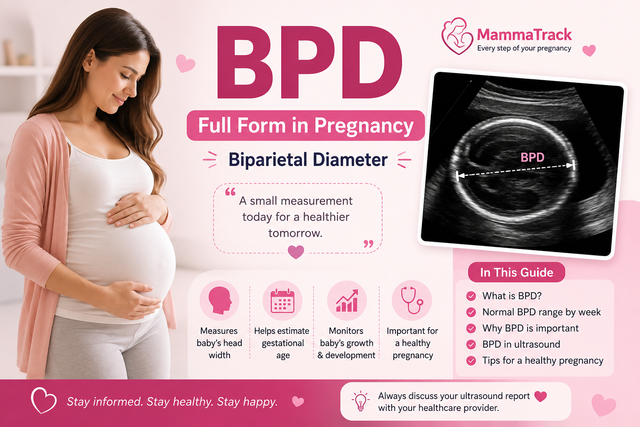
Pregnancy is filled with excitement, hope, and sometimes confusion—especially when you receive your ultrasound report. If you've searched for BPD full form in pregnancy, you're not alone. Many expecting parents notice the term "BPD" on their scan report and wonder whether it's normal, what it means, and why doctors pay so much attention to it.
The good news is that BPD (Biparietal Diameter) is one of the most important fetal measurements used during pregnancy. It helps healthcare providers monitor your baby's growth, estimate gestational age, and ensure your little one is developing as expected.
In this guide, we'll explain everything about BPD full form in pregnancy, including its meaning, normal range, ultrasound measurement, and when you should speak with your healthcare provider.
What Is the BPD Full Form in Pregnancy?
The BPD full form in pregnancy is Biparietal Diameter.
It refers to the measurement of your baby's head from one parietal bone to the other. In simple words, it measures the width of your baby's head during an ultrasound examination.
Doctors use this measurement to:
-
Estimate your baby's gestational age
-
Monitor fetal growth
-
Compare development with pregnancy milestones
-
Help estimate your expected due date
-
Identify possible growth concerns if measurements are significantly outside the normal range
BPD is considered one of the standard fetal biometric measurements throughout pregnancy.
Why Is BPD Important During Pregnancy?
Every parent wants reassurance that their baby is growing well. That's exactly where BPD becomes valuable.
A healthy Biparietal Diameter usually indicates that your baby's head is growing in line with the pregnancy stage. However, doctors never evaluate BPD alone. Instead, they combine it with other ultrasound measurements like:
-
Head Circumference (HC)
-
Abdominal Circumference (AC)
-
Femur Length (FL)
Together, these measurements provide a complete picture of fetal growth.
How Is BPD Measured?
During a routine ultrasound, the sonographer measures the widest part of your baby's head.
The measurement is taken:
-
Between the two parietal bones
-
At a specific angle of the fetal head
-
Using ultrasound imaging
-
Without causing pain or discomfort
The scan usually takes only a few minutes and is completely non-invasive.
When Is BPD Measured?
BPD is commonly measured during:
First Trimester
In early pregnancy, Crown-Rump Length (CRL) is generally more accurate for dating the pregnancy.
Second Trimester
This is when BPD becomes one of the most reliable measurements.
Doctors often use it during the 18–22 week anatomy scan to evaluate fetal development.
Third Trimester
BPD continues to be measured, although later in pregnancy other measurements may provide a more accurate assessment of growth because babies develop at different rates.
Normal BPD Range by Pregnancy Week
The normal BPD value changes as your baby grows.
Approximate values include:
| Pregnancy Week | Approximate BPD |
|---|---|
| 16 weeks | 34–38 mm |
| 20 weeks | 46–52 mm |
| 24 weeks | 58–64 mm |
| 28 weeks | 69–75 mm |
| 32 weeks | 80–86 mm |
| 36 weeks | 88–93 mm |
Remember that these values are averages. Slight differences are completely normal.
Can a Small BPD Be Normal?
Yes.
A slightly smaller BPD does not automatically mean something is wrong.
Possible reasons include:
-
Normal genetic variation
-
Family traits
-
Slight differences in pregnancy dating
-
Natural growth variation
Your doctor will compare multiple measurements before making any conclusions.
What If the BPD Is Larger Than Normal?
Sometimes the BPD measurement may appear larger than expected.
Possible explanations include:
-
Incorrect pregnancy dating
-
Naturally larger baby
-
Family genetics
-
Temporary variation in fetal position
Only your healthcare provider can determine whether additional monitoring is needed.
Does BPD Predict Intelligence?
No.
This is a common myth.
The BPD full form in pregnancy refers only to the width of the baby's head. It does not measure intelligence, brain function, or future learning ability.
A baby's development depends on many factors including genetics, nutrition, overall health, and environment.
Is BPD Enough to Assess Baby's Growth?
No.
Doctors never rely on BPD alone.
They usually evaluate:
-
Head Circumference (HC)
-
Femur Length (FL)
-
Abdominal Circumference (AC)
-
Estimated Fetal Weight (EFW)
-
Amniotic fluid level
-
Placental health
Looking at all these measurements together provides a much more accurate understanding of fetal growth.
How Can You Support Healthy Fetal Growth?
While you cannot directly change your baby's BPD measurement, you can support healthy development by:
Eat a Balanced Pregnancy Diet
Choose foods rich in:
-
Protein
-
Iron
-
Calcium
-
Folate
-
DHA
-
Fruits and vegetables
Stay Hydrated
Proper hydration supports your overall pregnancy health.
You can estimate your daily hydration needs using the Pregnancy Water Intake Calculator
Attend Regular Prenatal Checkups
Routine prenatal visits help detect concerns early and ensure your pregnancy is progressing normally.
Follow Your Doctor's Advice
Never compare your baby's ultrasound measurements with someone else's pregnancy. Every baby grows at a unique pace.
Helpful Pregnancy Tools
Planning your pregnancy journey becomes easier with reliable tools.
You can estimate your baby's expected arrival using the Due Date Calculator
Looking for the perfect baby name?
Explore hundreds of beautiful options with the Baby Name Generator
Frequently Asked Questions (FAQs)
What is the BPD full form in pregnancy?
The BPD full form in pregnancy is Biparietal Diameter. It is an ultrasound measurement of your baby's head width from one parietal bone to the other. Doctors use it to assess fetal growth and estimate gestational age.
What is a normal BPD in pregnancy?
A normal BPD depends on the week of pregnancy. For example, around 20 weeks, the average BPD is approximately 46–52 mm, while at 32 weeks, it is usually 80–86 mm. Your healthcare provider compares your baby's measurement with standard growth charts.
Why is BPD important during pregnancy?
BPD is important because it helps doctors monitor your baby's head growth, estimate the baby's age, calculate the expected due date, and identify whether fetal development is progressing normally.
Can a baby's BPD be smaller than normal?
Yes. A slightly smaller BPD does not always indicate a problem. Factors such as genetics, family traits, or a minor difference in pregnancy dating can affect the measurement. Your doctor will evaluate BPD together with other ultrasound measurements before making any diagnosis.
What happens if the BPD is larger than normal?
A larger BPD may simply mean your baby has a naturally bigger head or that your pregnancy dates need adjustment. In some cases, your healthcare provider may recommend additional monitoring to ensure healthy fetal growth.
At what stage of pregnancy is BPD measured?
BPD is usually measured during the second and third trimester ultrasounds. It becomes especially useful between 18 and 24 weeks, when it helps estimate gestational age and monitor fetal development.
Can BPD accurately predict my due date?
BPD helps estimate gestational age, particularly during the second trimester. However, your expected due date is calculated using several factors, including your last menstrual period (LMP), early ultrasound findings, and other fetal measurements.
Is BPD alone enough to assess fetal growth?
No. Doctors evaluate BPD along with Head Circumference (HC), Abdominal Circumference (AC), Femur Length (FL), and Estimated Fetal Weight (EFW) to get a complete picture of your baby's growth.
Does a high or low BPD mean my baby has a birth defect?
Not necessarily. A single BPD measurement cannot diagnose birth defects. Your doctor considers your complete ultrasound report, medical history, and other tests before determining whether further evaluation is needed.
Can I improve my baby's BPD during pregnancy?
There is no specific way to increase or decrease your baby's BPD. The best approach is to maintain a healthy pregnancy by eating a balanced diet, staying hydrated, taking prenatal vitamins as prescribed, attending regular prenatal checkups, and following your healthcare provider's advice.
Is BPD measured in every pregnancy ultrasound?
In most routine prenatal ultrasounds—especially during the second trimester—BPD is one of the standard fetal biometric measurements used to monitor your baby's development.
Should I worry if my BPD result is slightly different from the average?
Usually, no. Every baby grows at a unique pace, and small differences from average values are common. If your healthcare provider has any concerns, they may recommend a follow-up ultrasound or additional monitoring rather than relying on a single measurement.
Final Thoughts
Seeing unfamiliar medical terms on an ultrasound report can feel overwhelming, especially if it's your first pregnancy. However, understanding the BPD full form in pregnancy can help ease your worries and give you greater confidence about your baby's development.
Biparietal Diameter (BPD) is a routine ultrasound measurement that helps healthcare professionals monitor your baby's head growth, estimate gestational age, and assess overall fetal development. It is one of several important measurements used to ensure your pregnancy is progressing as expected.
Remember that every baby grows at their own unique pace. A single BPD measurement rarely tells the complete story, which is why doctors always evaluate it alongside other ultrasound measurements and your overall pregnancy health.
If you ever have questions about your ultrasound report or notice a value that concerns you, don't hesitate to discuss it with your healthcare provider. Regular prenatal checkups, a balanced diet, proper hydration, and following your doctor's advice are the best ways to support a healthy pregnancy.
Understanding the BPD full form in pregnancy empowers you to better understand your ultrasound reports and follow your baby's growth with confidence. By staying informed and attending regular prenatal care, you can make your pregnancy journey healthier, safer, and more reassuring for both you and your little one.
Have a question or want to share your experience?
👉 Join our Community and connect with other parents.
Medical Disclaimer
This article is for informational purposes only and does not replace professional medical advice, diagnosis, or treatment. Always consult with a qualified healthcare provider for any questions regarding your health.
0 Comments
No comments yet. Join the conversation!
Leave a Reply
Your email address will not be published. Required fields are marked *